
 雷科技
雷科技
























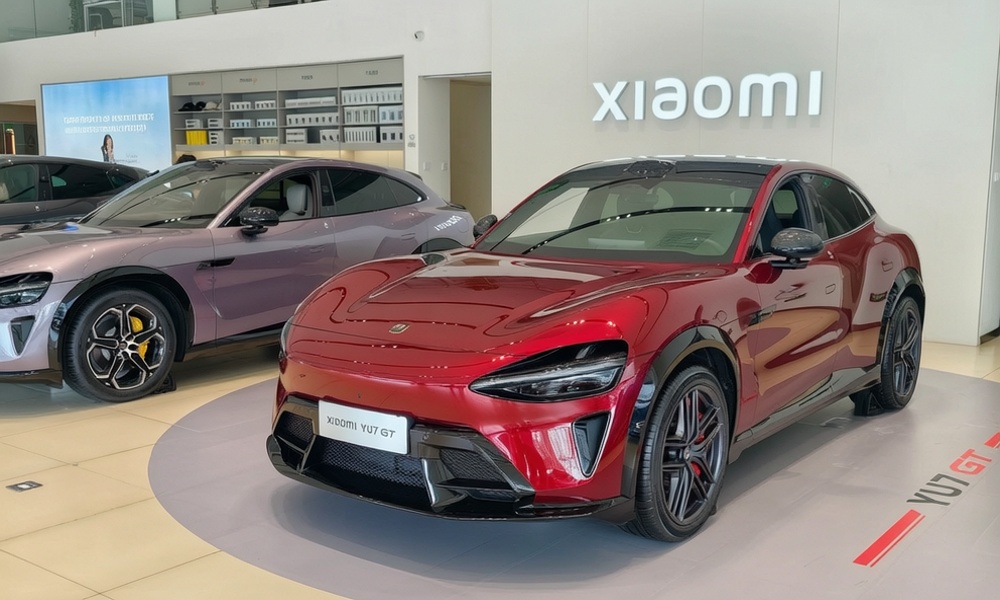

Following NIO, Xpeng, Li Auto and BYD, another Chinese automaker has unveiled its self‑developed smart‑driving chip.
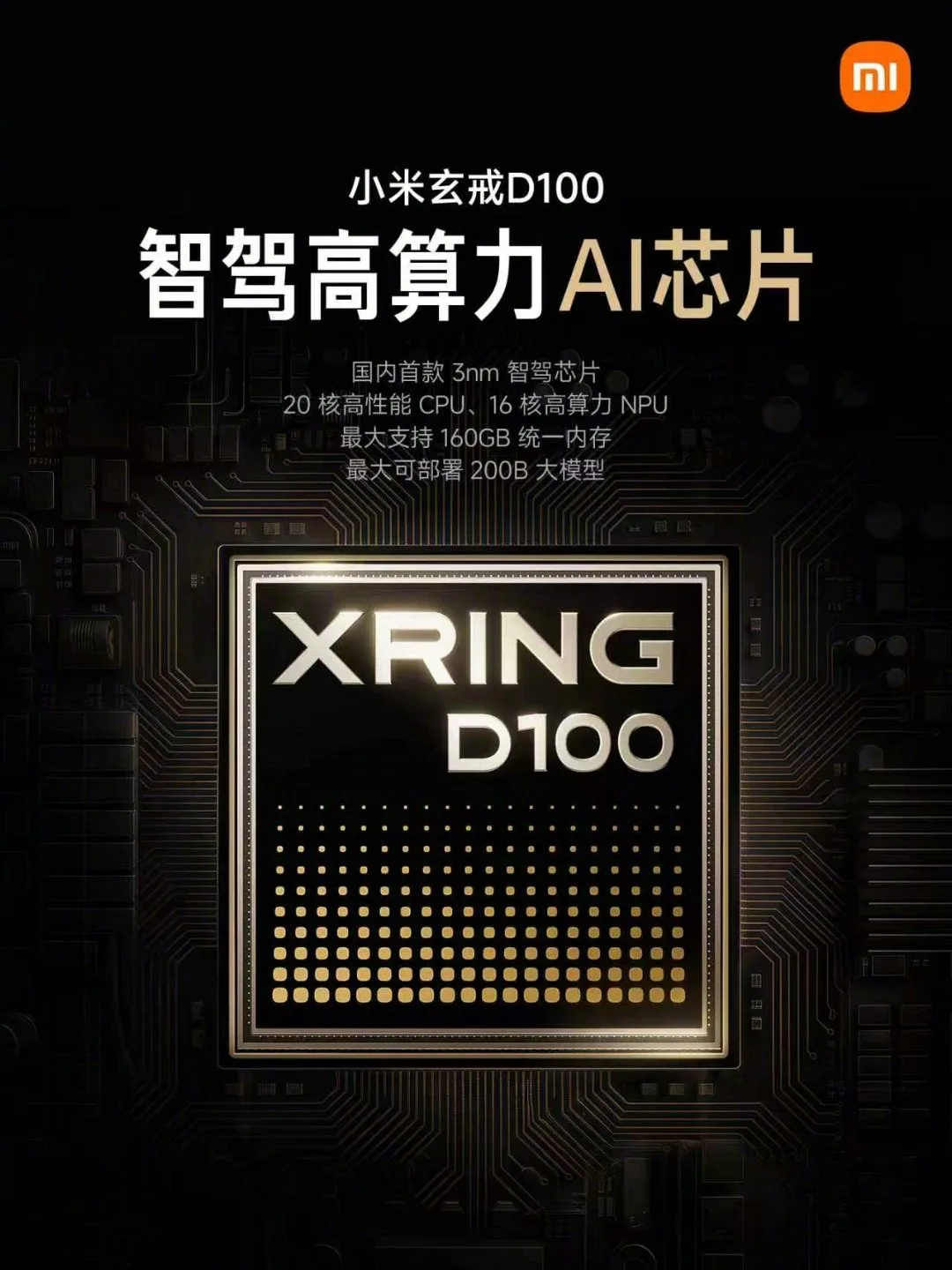
Recently, Xiaomi rolled out three chips, namely the Xuanjie O3, O100 and D100. Among them, the D100 is a high‑computing‑power AI chip for intelligent driving. It is China’s first intelligent‑driving chip built on the 3‑nm process, featuring a 20‑core high‑performance CPU, a 16‑core high‑compute NPU, support for up to 160 GB memory, and local deployment of large models with up to 200 billion parameters.
(Photograph source: LeiTech’s official Weibo account)
At present, the Xiaomi SU7 and YU7 series are equipped with NVIDIA‑built chips, delivering 700 TOPS of high computing power — above the industry average and sufficient to run advanced intelligent‑driving functions. Why, then, is Xiaomi pouring massive capital into developing a home‑grown intelligent‑driving chip from scratch?
Self‑developed Chips: Core Competitiveness in the L3 Era
On August 25, the draft revision to the Road Traffic Safety Law was submitted for initial review at the 24th Session of the Standing Committee of the 14th National People’s Congress. It introduces Special Provisions for Autonomous‑Driving Vehicles, clarifying that where road‑traffic‑safety violations occur while the autonomous‑driving function is active, the vehicle manufacturer or importer shall be held accountable for handling the violations.
Earlier, multiple authorities including the Ministry of Industry and Information Technology, the State Administration for Market Regulation and the Standardization Administration of China jointly released Intelligent and connected vehicle — Safety requirements for automated driving system (GB 44721‑2026), It sets a unified baseline for safety access for automated‑driving products and will come into force officially on July 1, 2027.
Multiple signs indicate that Level‑3 autonomous driving is rapidly moving from testing toward commercial deployment.
On the product side, nearly all new high‑end models from major OEMs are pre‑installing hardware platforms oriented toward L3. Perception sensors, steer‑by‑wire and brake‑by‑wire with dual redundancy, and high‑compute platforms are being fitted in advance. Once policies permit, L3 capabilities will be unlocked via OTA updates.
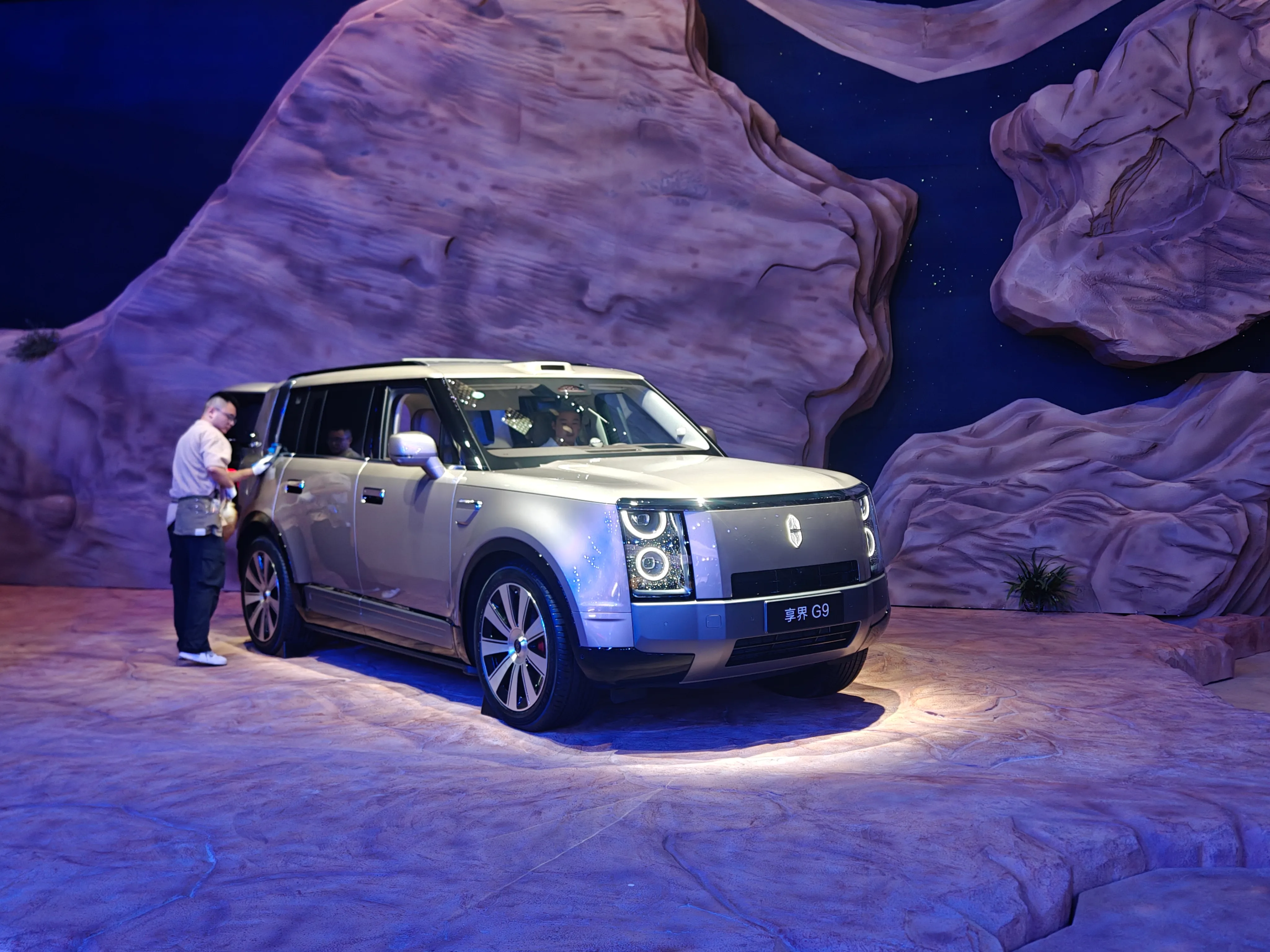
For instance, the recently‑launched Stelato G9 is built on an L3‑grade autonomous‑driving architecture. NIO, Xpeng and Li‑Auto have all equipped their vehicles with computing platforms delivering over 2 000 TOPS paired with high‑performance sensors, getting ready for an L3 upgrade.
(Photograph source: Dianche Tong)
NIO, Li Auto and Xpeng, automakers widely recognized as being in the industry’s first‑tier for intelligent‑driving technology, all equip their high‑end variants with self‑developed smart‑driving chips. Among legacy carmakers, BYD and Geely are also investing heavily in developing intelligent‑driving chips.
Pre‑installing L3‑oriented hardware directly drives up vehicle BOM costs. In the past, competition for advanced intelligent driving centered on “whether the feature exists”. Today, the contest lies in whether costs can be brought down after large‑scale commercial rollout. By launching the Xuanjie D100 at this juncture, Xiaomi’s primary goal is to achieve independent control over costs.
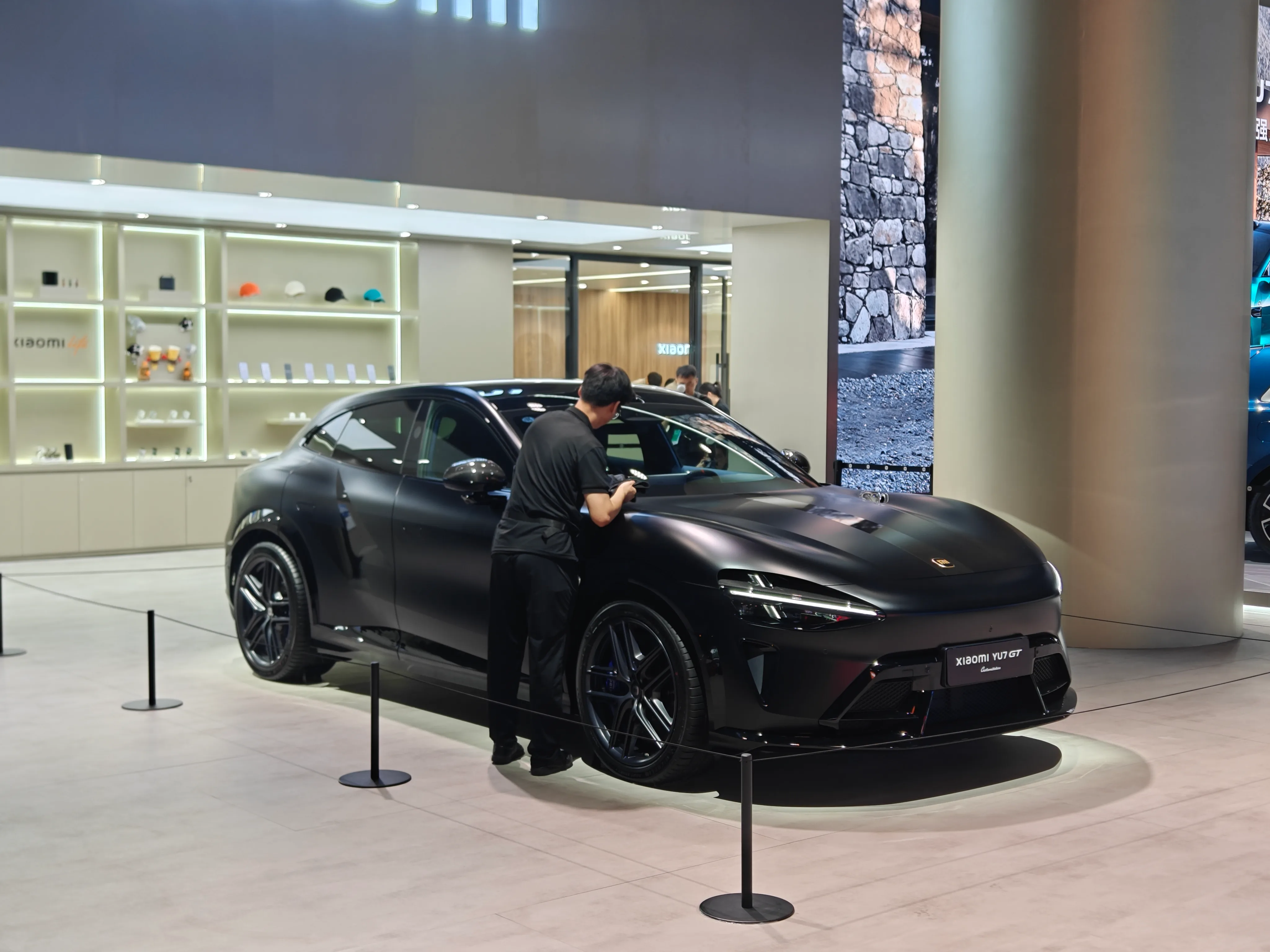
(Photograph source: Dianche Tong)
Under the external‑procurement model, costs accumulate across chip sourcing, domain controllers and supporting toolchains, making it hard to bring down hardware costs for the intelligent‑driving domain. With its self‑developed intelligent‑driving chip, Xiaomi can achieve end‑to‑end integration of chips, domain‑controller hardware and underlying BSP software, and reduce premiums charged by intermediate suppliers.
As future vehicle models reach large‑volume production, per‑vehicle costs for intelligent‑driving computing power will continue to be amortized, creating greater leeway for overall vehicle pricing. Xiaomi will be better positioned, whether it is maximizing performance on high‑end trims or popularizing advanced intelligent‑driving capabilities to mid‑ and low‑spec variants.
Secondly, when third‑party general‑purpose chips are used, an automaker’s algorithm team has to perform extensive adaptation, quantization and model distillation work. Algorithm logic must be adjusted to fit the chip’s hardware architecture, and the efficiency of many operators cannot be fully leveraged.
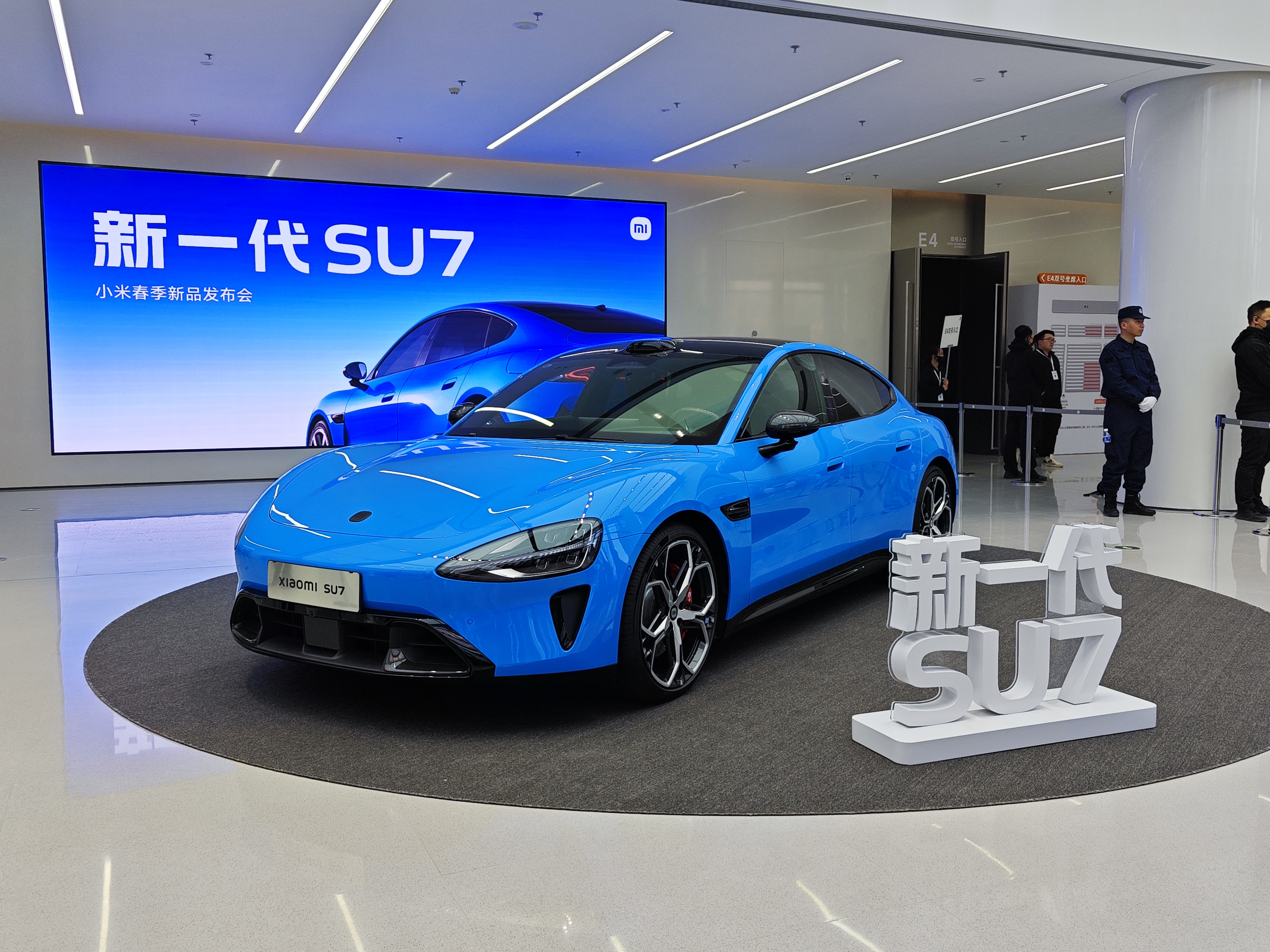
(Photograph source: Dianche Tong)
Built on the Xuanjie D100, Xiaomi can design its NP units around the operators, data flows and memory‑access characteristics of its proprietary XLA end‑to‑end intelligent‑driving large model. In‑hardware native optimization is achieved for large‑model inference, world‑model computation and multi‑sensor fusion, cutting inference latency and improving power consumption performance.
The same intelligent‑driving large‑model delivers noticeably different real‑world performance when running on a natively‑adapted in‑house chip versus being ported to a general‑purpose chip. Especially for L3 scenarios, requirements for decision‑making latency and system stability are far stricter than for L2+ driver‑assistance systems. Deep coupling between hardware and algorithms forms a critical foundation for safe L3 operation.
Merely developing upper‑layer algorithms is equivalent to building a house on someone else’s foundation. The pace of underlying iterations and upper limits of hardware capabilities are subject to external suppliers. With self‑developed chips, Xiaomi gains full control over the underlying stack. Intelligent‑driving iterations are no longer constrained by external chip‑update cycles. New algorithm innovations can be reflected at the hardware level at the earliest opportunity, building hard‑to‑replicate competitive moats.
Is the Xuanjie D100 the final piece of Xiaomi’s intelligent‑driving puzzle?
At the Xiaomi Auto Tech Launch event on December 28, 2023, Lei Jun announced that Xiaomi’s intelligent‑driving technology would join the industry’s first tier by the end of 2024. Back then, Xiaomi’s first vehicle, the SU7, had not yet gone on sale.
More than two years on, Xiaomi HAD intelligent driving has undergone multiple OTA iterations. Highway NOA is mature and stable, urban NOA keeps improving, and the end‑to‑end large model has been rolled out to a large user base. One of our colleagues from Lei Tech / EV‑Tong took delivery of a Xiaomi SU7 and immediately headed for roads where Navigate‑on‑Autopilot is permitted.
Nevertheless, in public discourse, Xpeng, Huawei, Li Auto and NIO remain the widely‑recognized first‑tier players in intelligent driving. BYD, with its dual‑backup parking and urban NOA features, is also regarded by the public as comparable to first‑tier brands.
For Xiaomi Auto, its biggest label to this day remains “performance”. The arrival of the Xuanjie D100 fills the computing‑power hardware gap, yet it is not the final piece of Xiaomi’s intelligent‑driving puzzle — merely its most important cornerstone.
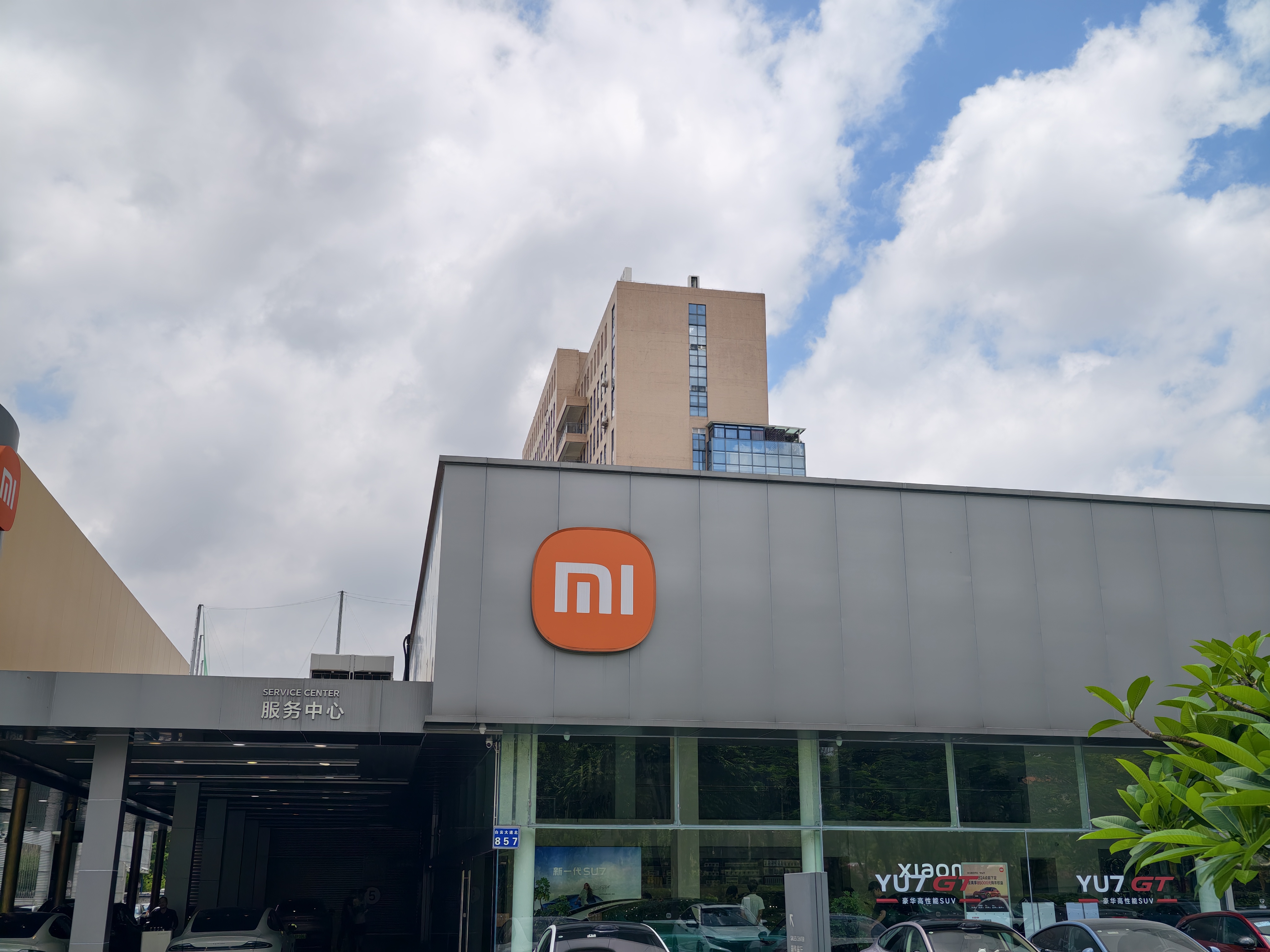
(Photograph source: Dianche Tong)
With self‑developed chips, Xiaomi can first achieve a complete hardware‑software closed‑loop. It gains full control over the entire chain: chip definition, low‑level drivers, operator adaptation, upper‑layer algorithms, on‑vehicle inference, road‑test data feedback, and simulation‑based training.
When the algorithm team puts forward new model requirements, these can be fed directly to the chip team. Hardware serves algorithms, and algorithms in turn fully tap hardware potential, resulting in markedly higher iteration efficiency. This approach has already been proven by Huawei, Xpeng and NIO.
Secondly, in‑house‑developed chips unlock the commercial potential of Level‑3 intelligent driving. L3 imposes stringent requirements on functional safety, dual redundancy, fault degradation, and parallel inference of multiple models. While externally‑sourced chips can support redundancy solutions, many safety features demand extensive secondary development on the automaker’s part. When Xiaomi launches future L3‑capable vehicles, it will no longer need to implement safety architectures through “patch‑work” modifications built atop third‑party general‑purpose chips.
It should be noted that Xiaomi has not disclosed the exact computing power of the Xuanjie D100. EV‑Tong (ID: dianchetong233) estimates that the single‑chip computing power ranges from 700 TOPS to 1000 TOPS, putting it on par with Xpeng Turing and BYD Xuanji A3.
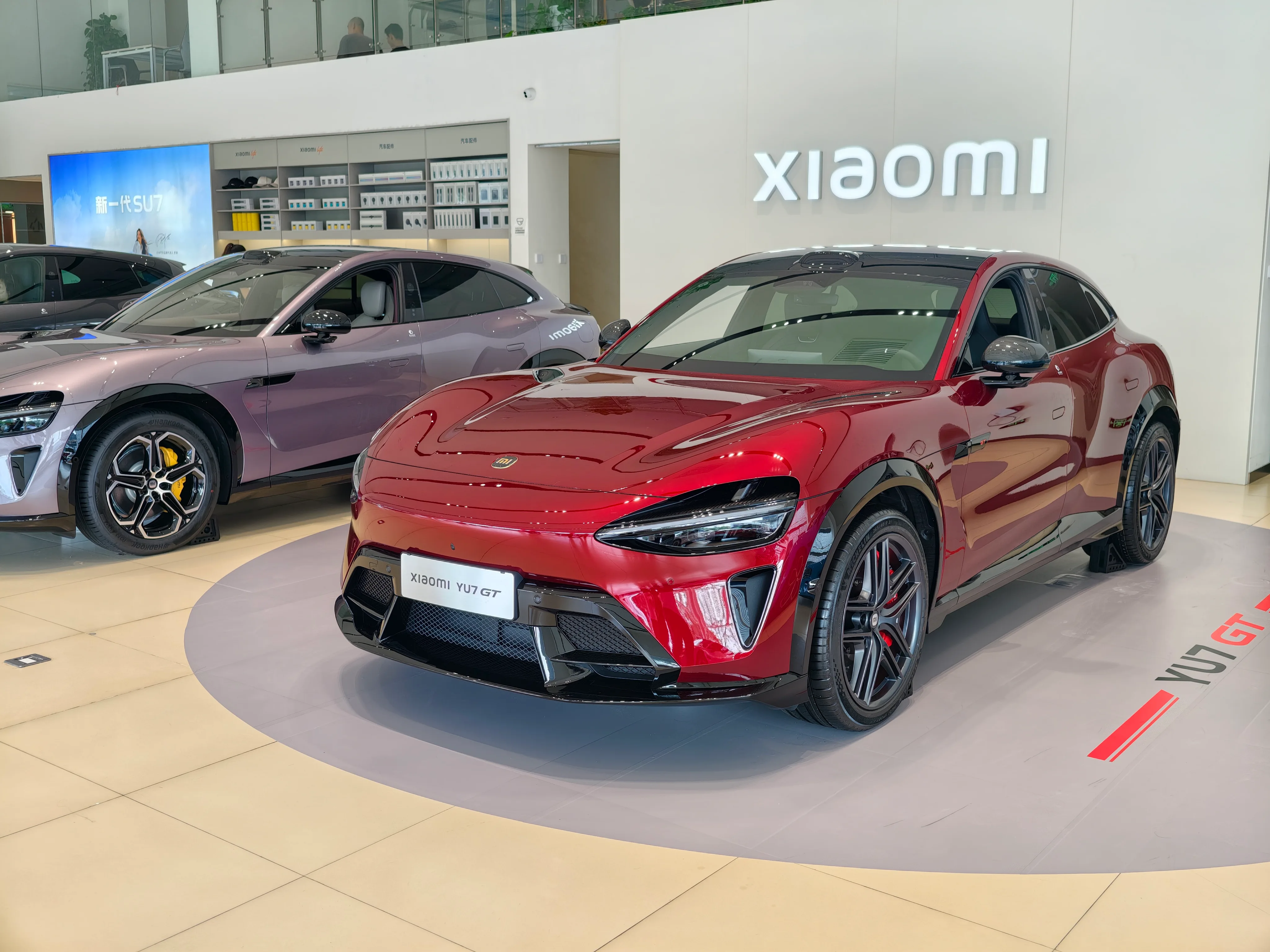
(Photograph source: Dianche Tong)
Chips, however, merely serve as a foundation and do not automatically translate to improved intelligent‑driving performance. For the Xuanjie D100 to deliver its full potential, it must clear numerous hurdles including automotive‑grade certification, massive post‑tape‑out validation, domain‑controller hardware development, BSP software refinement, deep porting of the XLA large model, and large‑scale road‑testing verification.
The Xuanjie D100 addresses the question of “whether an in‑house computing‑power foundation exists”. Nevertheless, continuous advancement of perception algorithms, accumulation of massive real‑world road data, capability to handle extreme long‑tail scenarios, and coordinated optimization of the vehicle chassis actuation layer still demand lengthy refinement. The arrival of the self‑developed chip marks a new starting‑point rather than the finish line for Xiaomi’s push into the first tier of intelligent‑driving players.
Given Xiaomi Auto’s two‑year product‑iteration cycle and the launch of the new‑generation SU7 this year, the Xuanjie D100 will most likely make its debut on the new YU7 series next year. The SU7 and Pengcheng series may not adopt the Xuanjie D100 until 2028. Of course, Xiaomi could conceivably roll out multiple “self‑developed‑chip‑equipped” models next year, or retrofit already‑launched vehicles with the Xuanjie D100 intelligent‑driving chip.
Self‑Developed versus Outsourced Chips: An Automaker’s Dilemma
China’s leading automakers have collectively embarked on a wave of in‑house chip development. NIO, Xpeng, Li Auto, BYD, Geely and Xiaomi have all joined the race to build intelligent‑driving chips. Meanwhile, NVIDIA has open‑sourced its Alpamayo intelligent‑driving large model, releasing base‑model weights, simulation frameworks and auto‑annotation tools to the industry. Automakers are permitted to perform secondary fine‑tuning and distillation based on this open‑source foundation, substantially lowering the barrier for developing in‑house intelligent‑driving large models.
On one hand, automakers are digging deep into underlying hardware. On the other, chip giants are opening up upper‑layer model capabilities, seeking deeper ties with vehicle manufacturers.
Developing intelligent‑driving chips in‑house is a capital‑intensive endeavour. From IP selection and architecture design to tape‑out, automotive‑grade certification and software‑stack development, costs start at billions of RMB, alongside sustained investment from chip‑engineering teams numbering in the thousands.
Only top‑tier automakers with sufficient annual sales volume can amortize these heavy R&D expenses. For many second‑tier domestic brands and joint‑venture OEMs, in‑house chip development yields a poor return on investment and makes little economic sense. For them, sourcing mature commercial chips paired with open‑source or third‑party intelligent‑driving models remains the most efficient approach.
Chip development also comes with long lead times: a chip generation typically takes three to four years from project initiation to vehicle deployment, and technical‑route failures remain a real risk. Even leading automakers generally adopt a dual‑track “outsourced + self‑developed” strategy, as exemplified by NIO and Geely.
Therefore, EV‑Tong holds the view that outsourced chips will not disappear, yet their role will fundamentally shift — from “the sole main solution” to “one among multiple options”. Completely abandoning external chip procurement is not a practical choice for the vast majority of automakers.