
 雷科技
雷科技
























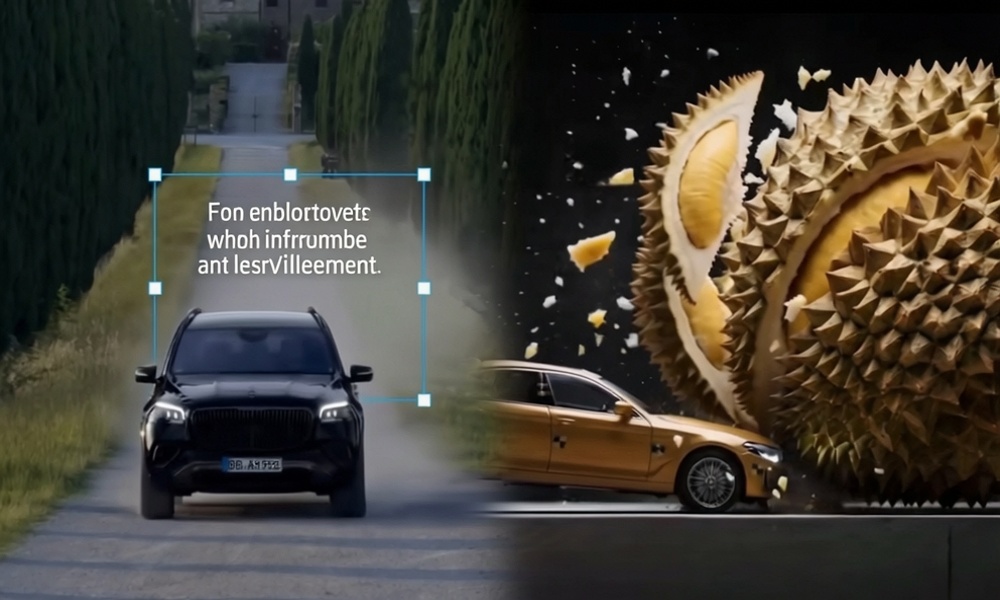

News update, August 26: Mercedes‑Benz and BMW, long‑time rivals for nearly a century, have surprisingly found themselves on the same side. Both have released creative short videos one after another, indirectly taking aim at the industry’s “quick‑build car” phenomenon.
Just how pointed are these two clips?
Mercedes’ piece is subtle yet power‑packed. It opens with a Maybach GLS gliding gracefully along a forest highway, looking like a typical commercial. Suddenly, a mouse‑dragged selection box pops up on‑screen, framing the entire vehicle — at first glance, it could easily pass for AI‑generated footage.
In the next moment, however, the car drives straight out of the box, confirming this is genuine live‑action shooting. The closing text drives home the message: “What can be boxed is a car; what can be proven through testing is true capability.”
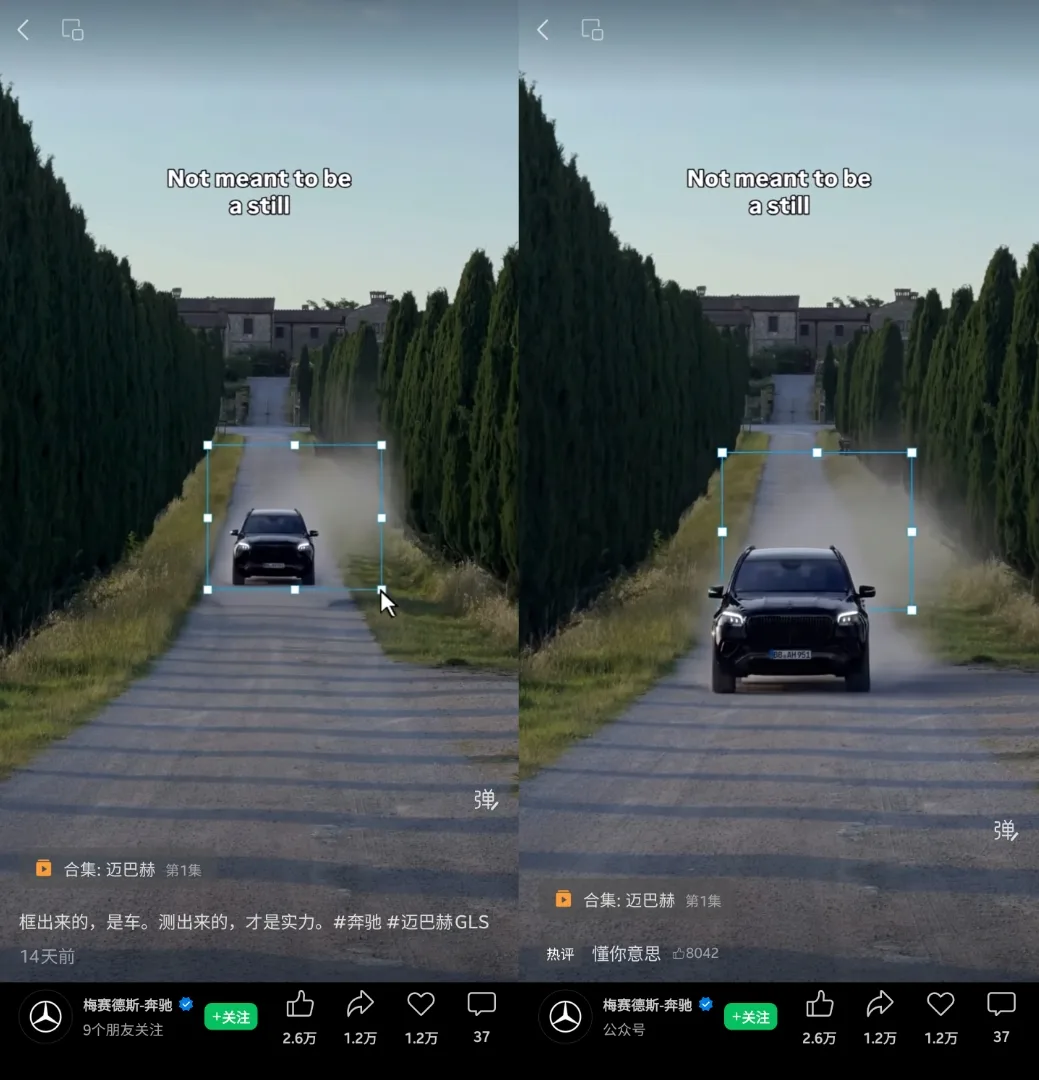
Image source: WeChat Video Channel
Some netizens re‑phrased it in plain Chinese to mean: Certain carmakers should stop relying entirely on photo editing and AI simulation to “build cars”. Even road‑test footage can be computer‑generated. Without genuine, rigorous real‑world testing, no matter how polished the appearance is, it is nothing more than an empty shell.
BMW took a more blunt approach on the other hand, rolling out a contrast‑driven comedy short.
The first half is deliberately childish: miniature car models are smashed against durians and pineapples to fake crash tests, while people blow air at the toy models to simulate wind‑tunnel experiments. The whole sequence looks like children playing make‑believe.
Then the scene cuts sharply to BMW’s real‑world crash‑test lab. Professional wind‑tunnel facilities roar to life, test dummies of various specifications stand ready, and massive volumes of real‑vehicle road‑test data scroll across the screen. It closes with the tagline: “It isn’t a BMW without tough, gruelling trials.”

Image source: WeChat Video Channel
It is obvious to discerning observers that these two century‑old brands have jointly taken aim at the rampant “quick‑built cars” plaguing the industry today.
So what exactly are quick‑built cars? Simply put, they are models rushed to market to seize market share and hit launch deadlines. Carmakers drastically shorten R&D cycles and cut or even skip essential real‑vehicle validation procedures before hastily rolling them out.
In the past, traditional carmakers generally spent 36 months — a full three years — on the complete development and validation of an all‑new model.
Road tests under extreme conditions such as bitter cold, scorching heat and high‑altitude environments alone required driving across the country through two full winters and two summers.
Now, however, many manufacturers have halved development cycles. An all‑new vehicle can be completed in just 18 months, while facelift variants may launch in a matter of months.
Just how rapid is this pace? Here are some statistics. According to data from DCar, counting annual facelifts, configuration variants and special‑edition models, more than 600 new vehicles were launched in China in the first half of this year. That averages over 100 releases per month, or three new cars hitting the market every single day.
This iteration rate outpaces even smartphone upgrades.
The catch is that a laggy phone can be restarted, software bugs can be fixed via system updates, and replacing one does not cost a fortune. Automobiles travel on public roads and carry the safety of entire families. Can they really undergo such breakneck iteration?
One can understand carmakers’ anxieties. Competition in the new‑energy vehicle market is cut‑throat. Launching one month earlier or later can make a world of difference in sales figures.
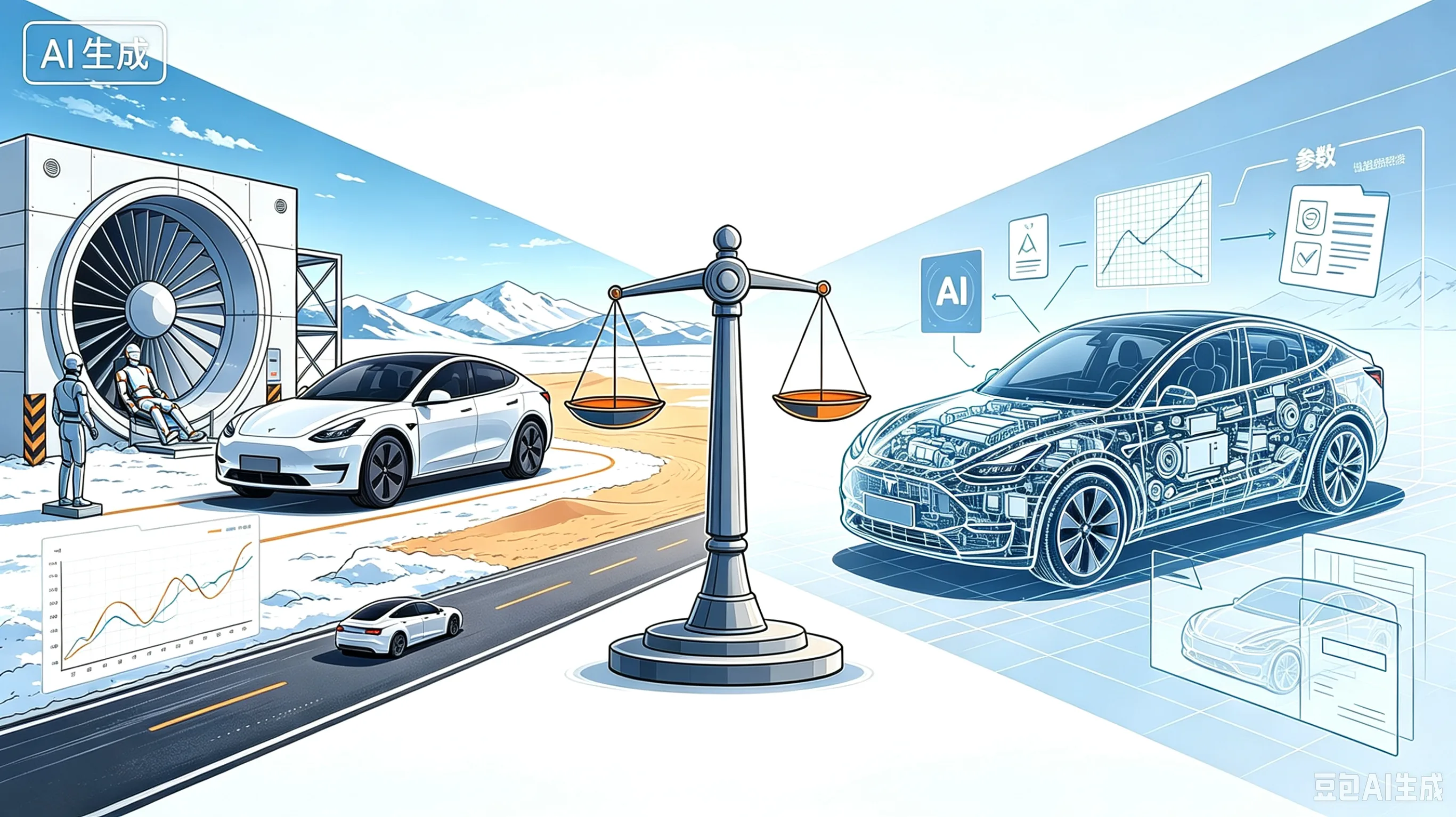
Image source: Doubao AI
Technologies such as virtual simulation and AI‑aided R&D can indeed boost efficiency and shorten development cycles. This represents technological progress and should not be dismissed outright.
However, Dianchetong (ID: dianchetong233) believes that improved efficiency does not justify cutting corners, and a faster pace must not mean crossing fundamental bottom lines.
AI can simulate numerous scenarios, yet it cannot replicate all kinds of unexpected incidents on real‑world roads. It cannot mimic the time‑driven patterns of metal fatigue and rubber ageing, still less reproduce the actual performance of batteries and complete vehicles under extreme conditions.
For these safety‑related validation procedures, not a single kilometre of required testing mileage can be omitted, nor can any mandatory test be skipped.
Of course, we should not label every carmaker with fast‑paced R&D as a producer of quick‑built cars. Some enterprises genuinely raise efficiency through technological optimisation and process upgrades without lowering testing standards, and such efforts deserve recognition.
What truly deserves rejection are companies that deliberately remove validation steps in pursuit of speed, gambling with consumers’ safety.
Dianchetong (ID: dianchetong233) holds that when market competition reaches its final stage, what ultimately counts is always quality and reputation.
Now we’d like to hear from you. What do you think of the quick‑built car phenomenon? Feel free to share your views in the comments section.