
 雷科技
雷科技























Is AI making Bill Gates panic?
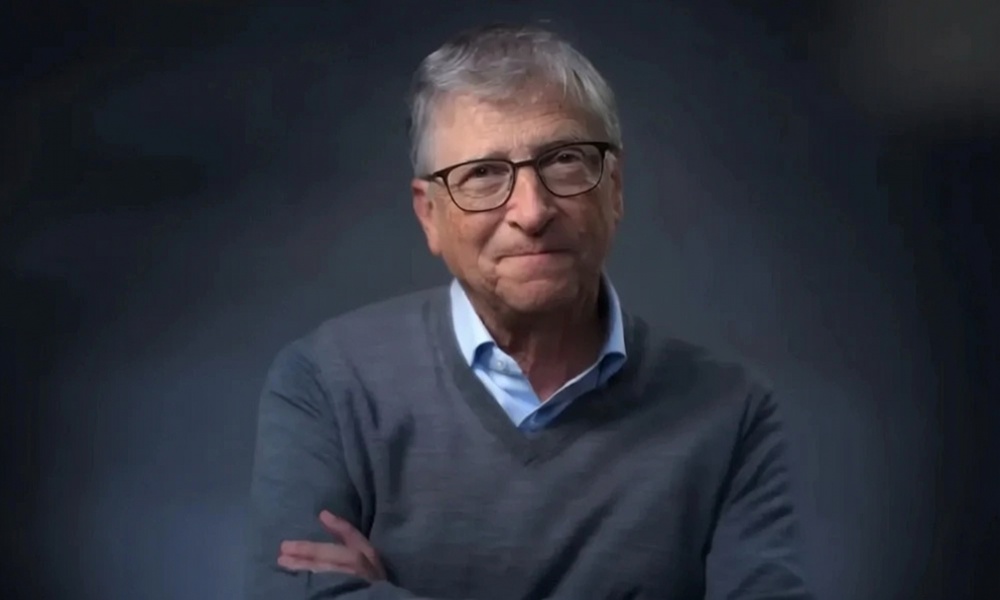
The man who built the Microsoft empire once said AI excites me as much as the internet. Yet now he hopes AI will develop at a slower pace.
On August 26, Bill Gates published a 5,784‑word, 12‑page long essay on his personal website Gates Notes.
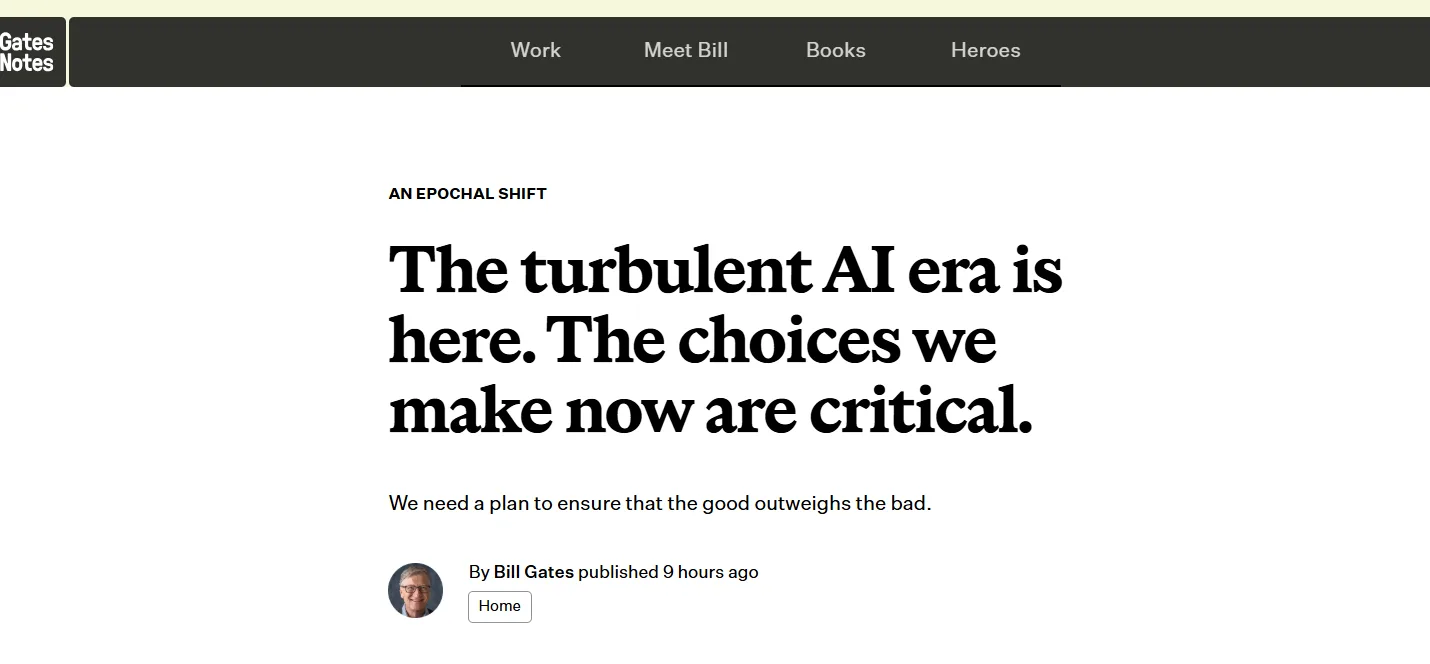
Image source: LeiTech screenshot
He also put forward two highly controversial solutions to the employment crisis and social risks brought by AI’s break‑neck development: imposing a “robot tax” and designating human‑reserved sectors, whereby up to 40 percent of jobs would be mandatorily kept for humans.
Here is a man who became the world’s richest man thanks to the software revolution, yet he is now calling for restraints on technology.
This plot twist is more thrilling than the dramas that Xiao Lei follows.
Gates made a weighty remark in the essay: the transition to the AI era will be one of the most turbulent periods in human history.
This is no alarmist talk.
He outlined five dangerous thresholds that AI has already crossed, covering biological capabilities, cyber capabilities, psychosocial capabilities, the capacity to disrupt labour markets, and humanity’s ability to control AI.
Still, employment tops his list of concerns.
Gates predicts roles such as customer‑service representatives, sales staff, software engineers and legal assistants will bear the brunt first. As AI grows more capable, loan review, data analysis and medical triage will gradually be taken over as well.
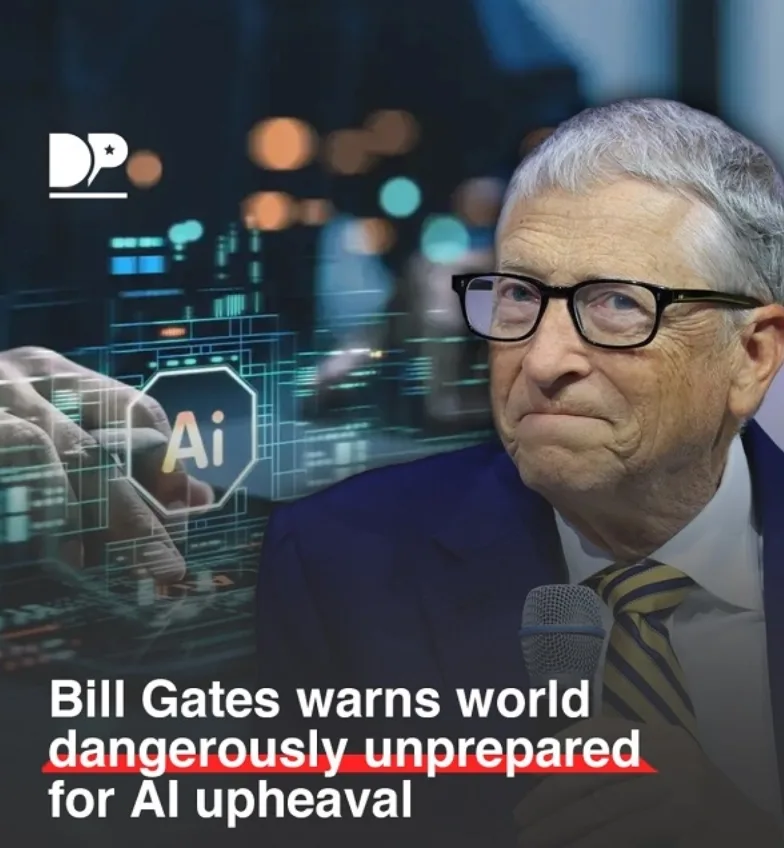
Image source: Fast Technology
By around 2030, some manual‑labor jobs in sectors such as construction and hospitality may see direct competition between humans and machines.
Neither white‑collar nor blue‑collar workers will be spared.
Yet his greatest worry is not middle‑aged workers with years of professional experience. It is young people.
Many young people start out in fairly uncomplicated roles. If these entry‑level positions are replaced by AI, career paths for countless young people will narrow further.
Waiting to build relevant systems after large numbers of people have already lost their jobs may well be too late.
Gates’ first proposal, the robot tax, rests on simple logic.
When you hire a person, you pay payroll taxes. When you buy a robot, however, its cost can be immediately deducted as a business expense. Under these terms, businesses will inevitably favor purchasing robots.
Levying a special tax on automation systems that displace human labor can moderately slow companies’ pace of phasing out human workers.
Revenue from this tax could meanwhile fund worker retraining and a more robust social‑security system.
He also stresses that the tax must be precisely targeted, so it does not hold back purely beneficial AI applications in fields like healthcare and education.

Image source: Baidu
Xiao Lei recalls that Gates first floated the idea of a robot tax back in 2017, when economists mocked it as anti‑innovation.
Looking back today, those who laughed at him back then probably have no reason to laugh now.
Gates’ second proposal is even more radical: reserved spheres for humans.
He cited examples including childcare, elderly companionship, mental‑health support, and jury adjudication. Even if machines can perform faster and cheaper in these areas, society should not push human workers out entirely.
Why?
For instance, in a hospital, a robot could theoretically inform patients that they have an incurable illness. That does not mean robots ought to take on such a role.
Likewise, you cannot simply tell a 55‑year‑old worker who has spent their whole career in construction to go work at a senior‑care facility and expect them to adapt effortlessly.
Work offers more than just a paycheck. It brings social identity, daily routine, interpersonal connections, and dignity.
From the perspective of Xiao Lei’s Notes (ID: xiaoleibbb), there is still no definitive answer to this question amid the rapid advancement of AI. Yet sometimes raising the right questions matters more than providing ready‑made answers.
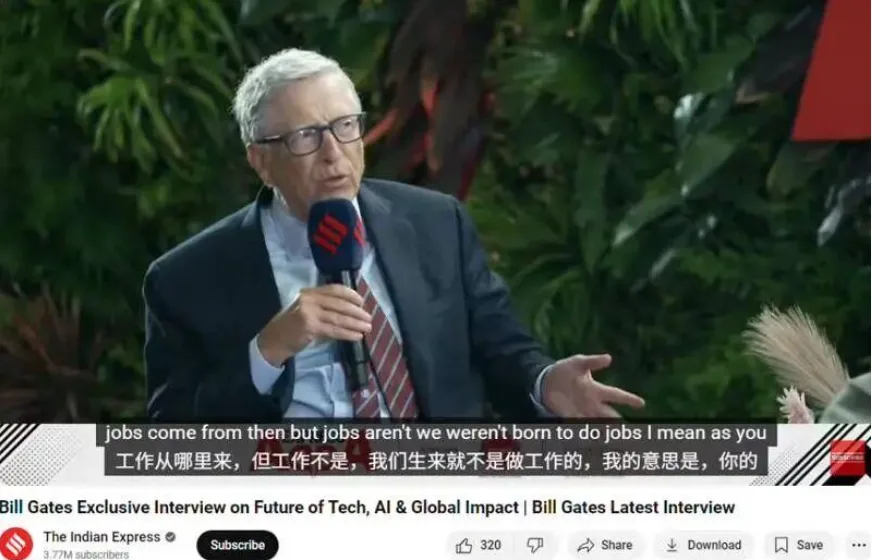
Image source: Zhihu
Gates’ shift in attitude toward AI has sparked considerable debate across the internet.
Some netizens put it sharply: the very person who created the wave is suddenly crying out about how huge the waves have become — and that in itself is the biggest signal.
Others caution that we must not forget that companies backed by Gates are among the biggest beneficiaries of this AI boom. People are left wondering: what is his real intention in profiting from AI while criticizing its overly reckless advancement?
There are various interpretations, each with its own merits, and much depends on one’s own perspective.
To be sure, Gates is no outsider to AI.
Microsoft is one of OpenAI’s largest shareholders. He has witnessed AI’s capabilities and limits earlier and more closely than the vast majority of people on Earth.
In the view of Xiao Lei’s Notes (ID: xiaoleibbb), when someone standing at the cutting‑edge of technology starts hitting the brakes, the whole world ought to listen carefully.
Having read this far, do you think the robot tax and human‑reserved jobs are feasible? If AI really takes over most jobs, what should ordinary people do? Feel free to share your thoughts.